

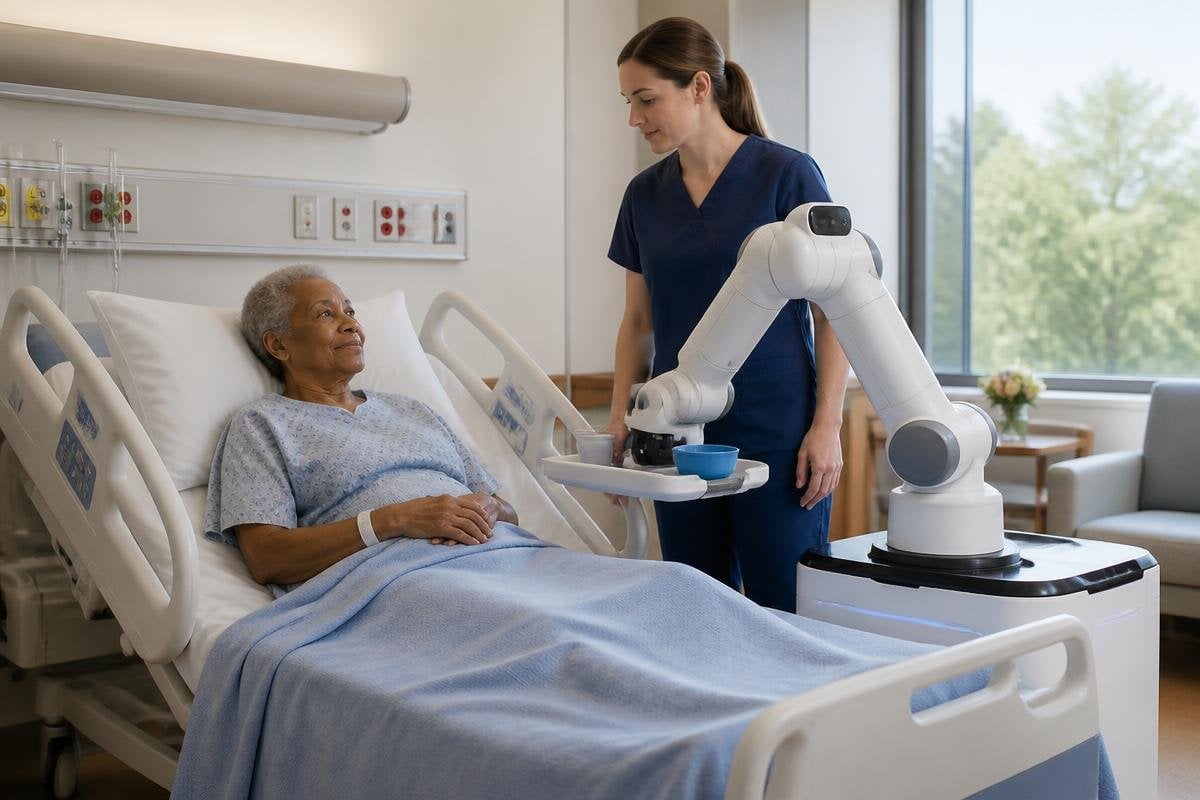
A robot in a hospital can lift a patient, carry medicine, or watch for a fall. The hard question starts when that machine affects a person who cannot freely agree, speak, or correct it.
- Patient consent must cover the robot’s real task
- A human must be able to stop or override the system
- Care teams need clear rules for data, errors, and responsibility
Consent has to cover the machine
Consent means more than agreeing to treatment. A patient should know when a robot will touch them, record them, move through their room, or make a recommendation that affects care.
That explanation should use plain words. A patient may accept a robotic lifting aid but refuse video recording.
Another patient may agree to a medicine-delivery robot but ask a nurse to handle the final handoff. Those choices need to remain visible to the care team.
Consent also needs a way out. If a patient changes their mind, staff should know how to pause the robot and offer another method. A consent form that gives no practical alternative does little to protect choice.
Match the robot to the task
The risk changes with the job. A robot that carries sealed supplies works under a different set of rules from one that moves a patient’s body or supports a medical decision.
Patient movement deserves careful limits. A lifting system needs a known weight range, a safe operating area, and a clear stop control. Staff also need a plan for a power loss, sensor fault, blocked route, or patient distress.
Fall-monitoring robots raise a different issue. Their cameras or microphones may collect private information even when no fall occurs. The hospital needs to state what the system records, how long it keeps the data, and who can see it.
The same rule applies to software that ranks alerts or suggests care. A recommendation can help a nurse sort a busy list, but the nurse needs access to the information behind it and the authority to reject the suggestion.
Keep a person responsible
Automation can spread responsibility across a vendor, hospital, manager, nurse, and software team. That spread creates a practical problem: after an error, someone still needs to explain what happened and fix the process.
A care team should name the person who watches the robot during each task. That person needs training on normal operation, warning messages, manual controls, and emergency shutdown. A written handoff should state when the robot is in use and when a human has taken over.
Human control only works when it is reachable. A stop button hidden behind equipment, a control that needs a long menu sequence, or an alert that staff cannot hear gives people control on paper and removes it in practice.
A robot can follow the same care rule for every patient and still produce uneven results if its data misses some groups. A fair review needs the machine, hospital task, staff role, and test date named. Robot 24 can help you check those details before the next section asks whether care stays fair across patients.
Fair care needs regular checks
Consistent rules can still produce unfair results if they fit some patients better than others. The care team should check how the system works across differences in age, mobility, language, skin tone, body size, and communication needs.
Access matters too. A patient who cannot hear an audio alert may need a visual signal. Someone with limited movement may need a different way to request help. These are design requirements, not optional extras.
Hospitals should keep records of robot errors, missed alerts, patient refusals, and manual takeovers. Those records help staff see patterns that a single shift may miss. They also give patients a route to raise a concern without arguing with a machine.
I’d keep robots in patient care only where the task has clear limits and a person can take over quickly. The machine should reduce a defined burden, not turn a private care decision into an automated guess.
A practical approval checklist
Before a hospital adds a robot to patient care, the team should:
- Name the exact task and the patients it may affect
- Write the consent script in plain language
- Set the data collected, storage period, and access list
- Test stop controls during power, sensor, and network faults
- Assign a trained human to supervise each active task
- Record errors, refusals, overrides, and patient complaints
The last point gives the policy a way to change. If staff keep taking over during the same part of a task, the hospital has evidence that the robot needs a new limit, better training, or removal from that job.
Patient-care robotics will keep moving into closer contact with people. The next useful test is not how much work a machine can perform, but whether a patient can understand its role, refuse it, and reach a responsible human when something goes wrong.
